Material applications
FiberPilot Procurement turns outdoor program use into purchase requirements
FREE sourcing support and up to 3% for qualified business buyers. Eligibility applies to qualified business buyers and is confirmed after we review your product, quantity, destination, and sourcing requirements.
A buyer brief, comparable material options, clear supplier responsibilities.
Material applications
Define the reference that both parties will use. Outdoor and performance programs fail when a search term is treated as a climate rating. Write rain, snow, wash, flex and abrasion conditions, then pick methods that match those conditions.
State whether the material is a shell, lining, pack body, gaiter, awning-adjacent outdoor textile or another defined part. Record contact with water, wind, UV, flexing at seams and expected care. Apparel next-to-skin layers need hand and noise notes; packs need tear and abrasion notes. Do not import automotive or industrial claims that this cluster does not evidence. Site constraints such as cutting width, marker efficiency and bonded-seam plans should appear before a mill is asked for a lowest minimum.
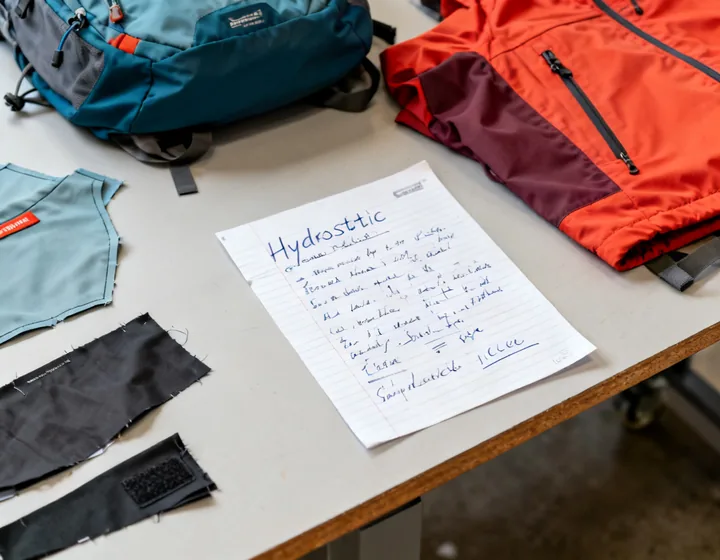
Hydrostatic pressure, moisture vapor transmission, colorfastness, dimensional stability, abrasion, pilling, tear and breaking force are different questions. Name the method family, edition if known, specimen, conditioning and whether the test is on the face, coating, film or full laminate. ASTM and AATCC listings are public indexes, not product results. A supplier certificate without article, date and batch is not acceptance evidence.
Usable width changes marker yield. Finish can add water resistance and also change stitch density and bonding. Quantity should show per color and total, with yards, meters or rolls. Delivery stages (sample, pre-production, bulk) and US destination must be in the same brief so freight and timing are compared on one basis. Documents requested for fiber-content labeling on covered US textile products should be reviewed with qualified parties; this page is not legal advice.
Two selection trade-offs should stay visible. A stock outdoor program can shorten sampling when fiber composition, weave, GSM, usable width and finish already fit; custom lamination or coating can match a retained swatch but needs explicit minima, lab dip gates and bulk-lot identity. A lowest unit price is not comparable until usable width, yield, testing, packing, freight, duties and US destination sit on the same basis. Family brochures help discovery; acceptance still needs article-bound hydrostatic, moisture vapor, colorfastness or abrasion evidence.
Continue with configurations or send the application, specification and destination.
Share end use, method names you already require, quantity and destination. We will ask suppliers to answer those fields instead of substituting a brand slogan.